
Richmond County Court Records After a Jail Arrest
A Richmond County arrest usually creates two related records streams. The first is the jail or booking side, handled through Richmond County Jail and the Richmond County Sheriff's Office. The second is the court side, maintained by the North Carolina Judicial Branch after charges are filed, scheduled, amended, dismissed, or resolved. After a person is booked, a magistrate or judicial official may address initial release conditions, and the District Attorney decides what charges will be prosecuted in court.
Use Richmond County jail inmate records when the question is whether a person is currently detained, what admit date appears, or what primary booking charge the roster shows. Use Richmond County jail mugshots and booking-photo information for the limits of photo access. Court records after a jail arrest belong to the case system: defendant name, case number, filed charge, court date, disposition, warrant-related events, and the difference between an accusation and a conviction.
How to Find Court Records After an Arrest in Richmond County
The North Carolina Judicial Branch routes online case searches through the NC eCourts Portal. The Portal supports Smart Search for court records and case information, hearing searches for court dates, some criminal and infraction payments, and judgment searches. A Richmond County search should begin with the defendant's name or known case number, then be checked against the jail roster if the arrest was recent.
NC eCourts Portal is the statewide entry point for Smart Search and hearing searches tied to Richmond County criminal cases.
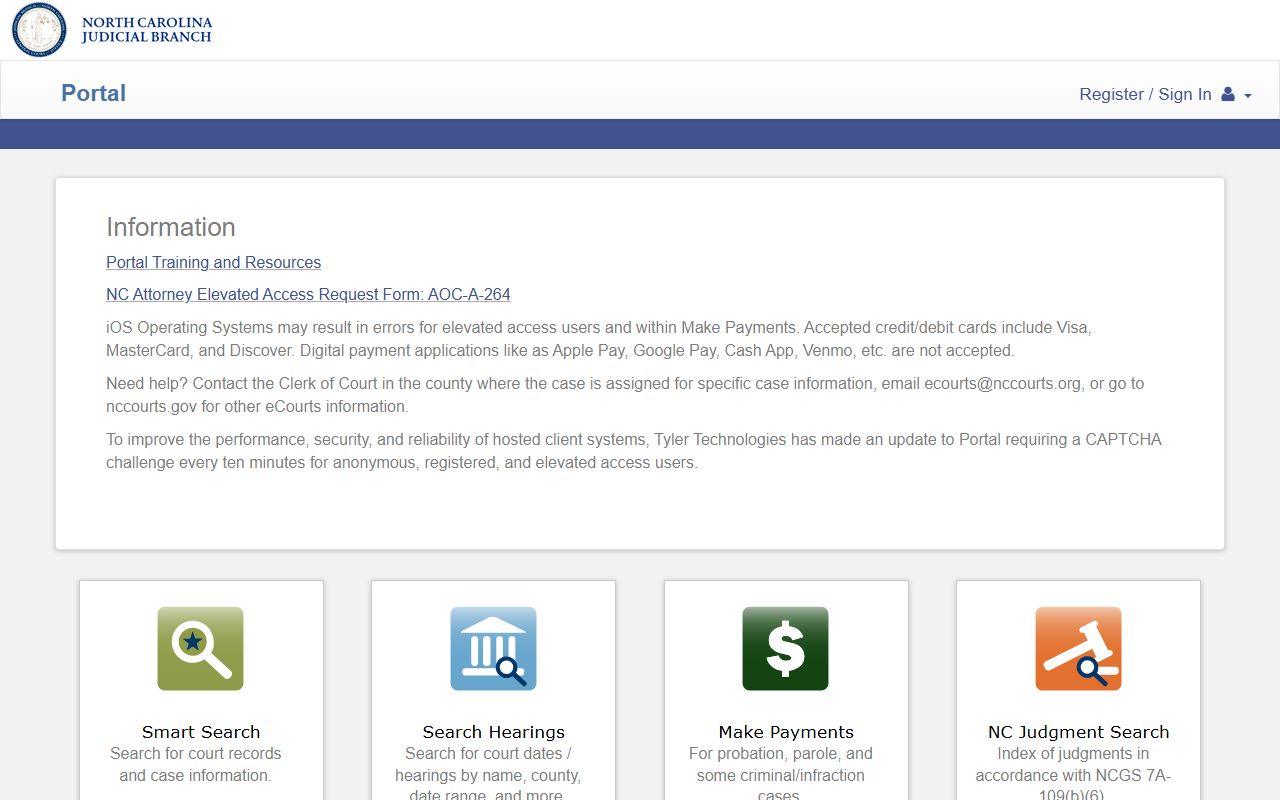
- Search the official Richmond County Jail webapp first when custody, admit date, or bond visibility is the immediate question.
- Open NC eCourts Portal Smart Search and search by defendant name or case number for the filed court case.
- Use Search Hearings by name, county, and date range when the next court date is the main issue.
- If Portal is unavailable or the case is older, use a public self-service terminal or request help from the Richmond County Clerk of Superior Court.
- Compare each court charge with the jail roster charge instead of assuming the labels are identical.
| Field / Tool | Type | Required | Options / Format Notes |
|---|---|---|---|
| Smart Search | Search tool | Unspecified | Search court records and case information by defendant name, case number, attorney, and other available criteria. |
| Search Hearings | Search tool | Unspecified | Search court dates and hearings by name, county, date range, and related hearing criteria. |
| Make Payments | Payment tool | Case-dependent | Available for probation, parole, and some criminal or infraction cases; Portal information lists Visa, MasterCard, and Discover. |
| NC Judgment Search | Search tool | Unspecified | Judgment index search under NCGS 7A-109(b)(6), separate from jail booking status. |
| Register / Sign In | Account controls | Optional for public searching; required for some elevated features | Use only when the Portal requires an account for a particular action. |
| CAPTCHA | Security control | Required during use | The Portal notes CAPTCHA challenges for anonymous, registered, and elevated users. |
Richmond County Judicial Center Contacts
The Richmond County Judicial Center is the local court location for clerk access, public terminals, paper files, and case-number confirmation.
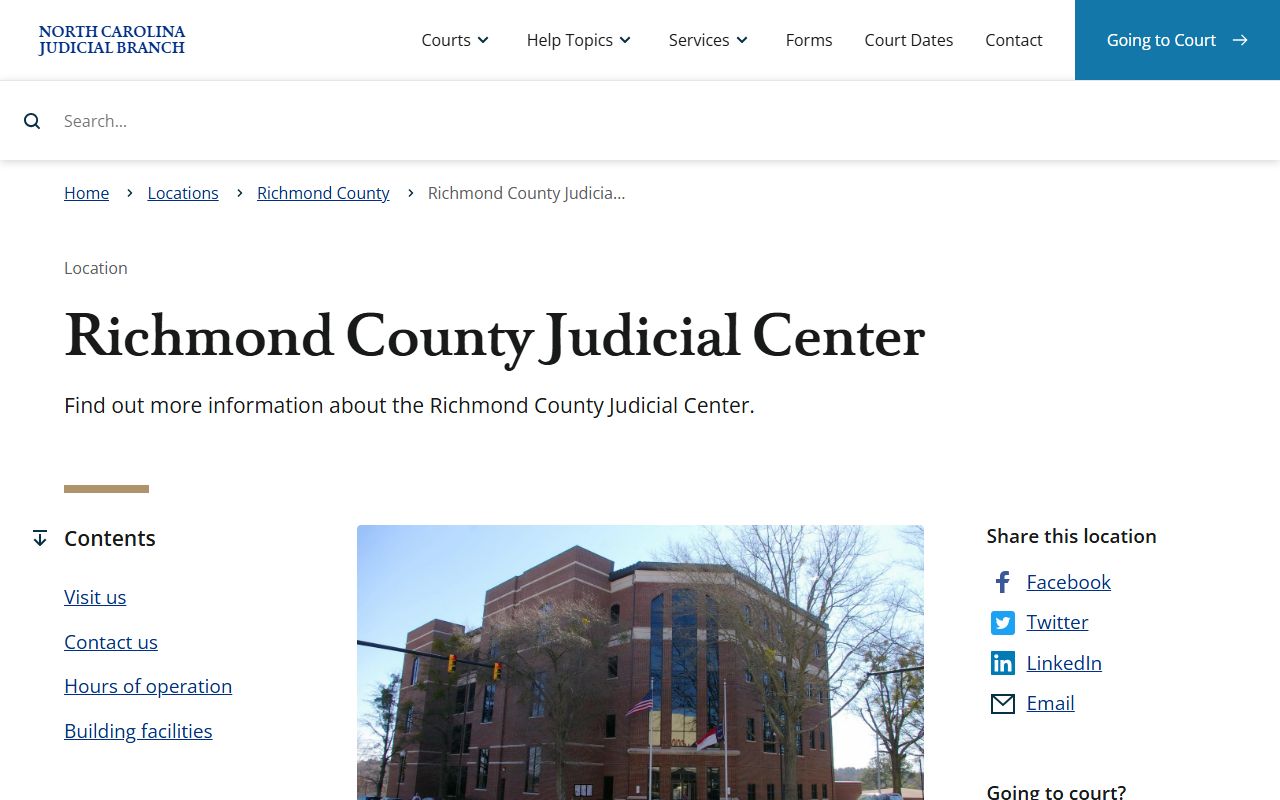
| Office | Contact | Use |
|---|---|---|
| Richmond County Judicial Center | 105 W Franklin St, Rockingham, NC 28379; (910) 419-7400 | Main local court contact and courthouse location. |
| Clerk of Superior Court | (910) 419-7400 | Case files, clerk terminals, copies, and case-number confirmation. |
| District Attorney | (910) 419-7500 | Prosecutor-facing questions, victim services routing, and charge-prosecution context. |
| Magistrates | (910) 419-7599 | Initial process, release conditions, and some warrant or first-appearance questions. |
District Attorney Jamie Adams and District 21
Richmond County is part of North Carolina Prosecutorial District 21 with Anson and Scotland counties. The official Prosecutorial District 21 page names Jamie Adams as District Attorney and lists the Richmond County office contact information.
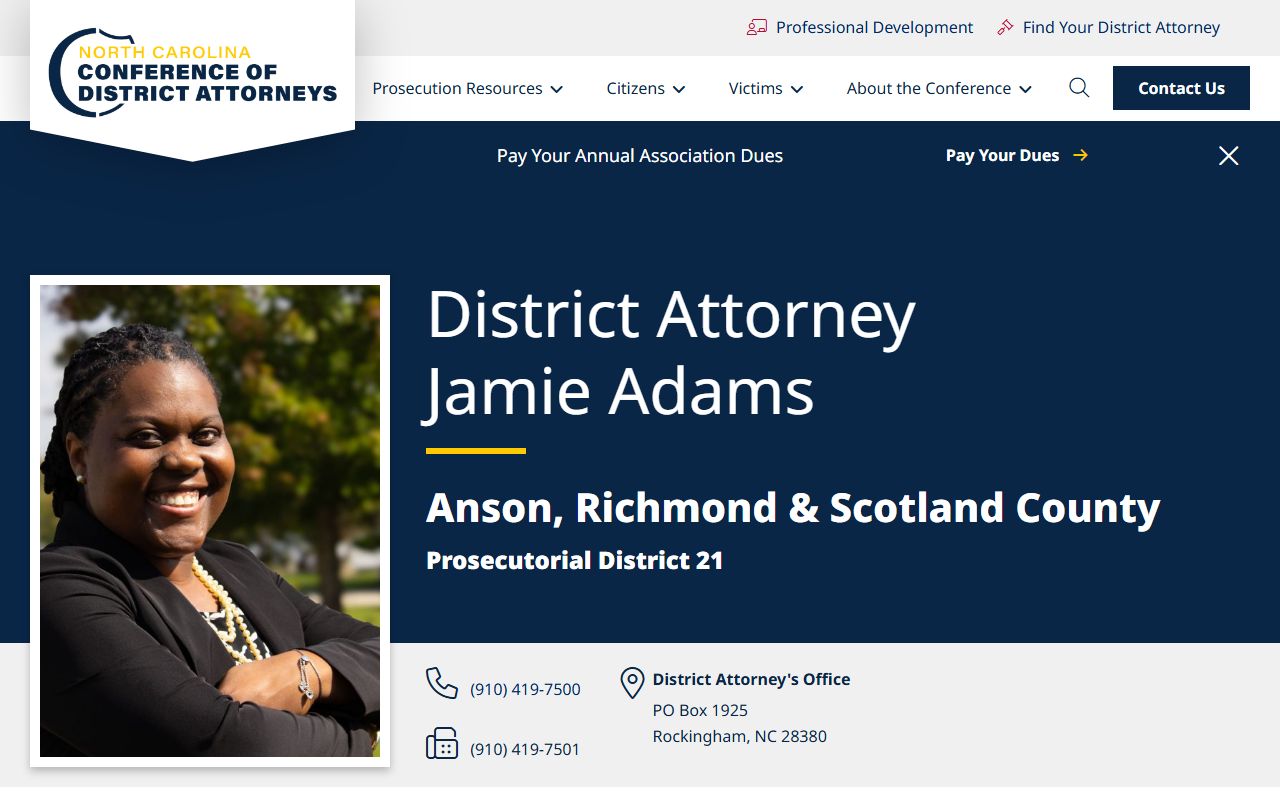
The District Attorney's Office lists PO Box 1925, Rockingham, NC 28380, phone (910) 419-7500, and fax (910) 419-7501. A Judicial Branch news release dated September 30, 2024, reported that Governor Roy Cooper appointed Jamie Adams to replace retiring District Attorney Reece Saunders. For ordinary case-file access, use Portal or the clerk. For prosecutor-controlled decisions such as amendments, dismissals, pleas, and trial calendars, the DA role explains why the court record may not match the jail entry word for word.
How Charges Get Filed After an Arrest
An arrest charge is the accusation used at intake or on the process that brought the person to jail. A court charge is the accusation filed, amended, indicted, dismissed, or otherwise handled in court. In Richmond County, the jail webapp may show the primary booking charge and court-type field, but the prosecuting charge belongs in the court record. Felony matters may move differently from misdemeanors because Superior Court proceedings can involve grand-jury indictment and later calendar settings.
| Document or Process | Who Uses It | What It Means | Where to Check |
|---|---|---|---|
| Complaint or criminal process | Law enforcement, magistrate, or prosecutor | Starts or supports the accusation that brings a person before court. | Portal, clerk terminal, or clerk office when publicly available. |
| Warrant or order for arrest | Judicial official or court | Authorizes arrest or custody after a charge, failure to appear, or court noncompliance. | Jail roster if served and booked; Portal or clerk for court context. |
| Information or prosecutor filing | District Attorney | Shows what charge the prosecutor has chosen to pursue in court. | NC eCourts Portal or Richmond County Clerk of Superior Court. |
| Indictment | Grand jury | Formal accusation commonly associated with felony prosecution in Superior Court. | Portal, public terminal, or clerk file if not restricted. |
Charge Status in Court Records After a Jail Arrest
Charge status can change after a Richmond County arrest. A booking charge may be carried forward, reduced, replaced, indicted, dismissed, or resolved by plea or trial. The jail roster is useful for immediate custody context, but court records show the formal status of the case. Review each charge separately because one case can include multiple counts with different outcomes.
| Status | What It Means | Important Limit |
|---|---|---|
| Pending | The charge remains open and has not reached final disposition. | Pending does not mean conviction. |
| Amended / Reduced | The charge changed from the original arrest or booking label. | The roster may still reflect an earlier label or a primary-charge summary. |
| Dismissed | The charge ended without a conviction on that count. | A dismissed public record may still exist unless expunged or restricted. |
| Nolle prosequi / not pursued | The prosecutor declines to continue prosecution on that charge. | Check the exact court terminology shown in the case record. |
| Convicted / guilty plea | A plea or finding of guilt has been entered. | The person may later move from county custody to NCDAC if sentenced to state prison. |
First Appearance, Bond, and Release After Arrest
The sheriff's inmate information page says Richmond County Jail detainee charge and bond information is provided through the webapp, although the captured static grid did not expose a bond amount column. North Carolina release conditions can include a written promise to appear, release on recognizance, unsecured bond, secured bond, cash bond, surety bond, restrictions, or a no-bond hold. If the arrest is recent, call the jail administrator line at (910) 997-8248 or the jail line listed by the North Carolina Sheriffs' Association at (910) 997-8265 before traveling.
| Bond Type | How It Works | Richmond County Checkpoint |
|---|---|---|
| Written promise / recognizance | The person agrees to appear without posting money upfront. | Confirm court date through Portal or the clerk. |
| Unsecured bond | Payment is owed only if release conditions are violated. | Review any restrictions set by the judicial official. |
| Secured or cash bond | Money, property, or surety must secure release. | Confirm accepted payment methods and hours with the jail or magistrate. |
| No-bond hold | Release is not available on the current hold or not yet set. | Ask whether another county, probation, parole, federal, or ICE hold is involved. |
Warrants That Lead to Richmond County Court Records
No official Richmond County Sheriff's Office active warrant search was confirmed in the sources reviewed. Warrant checks therefore use a practical chain: call the Sheriff's Office main line at (910) 895-3232 for local records routing, search the jail webapp if the warrant has already led to an arrest and booking, contact Richmond County Magistrates at (910) 419-7599 for process-related questions, and review Portal or clerk records for bench warrants and court orders tied to an existing case.
An arrest warrant authorizes custody on a criminal charge. A bench warrant or order for arrest often follows failure to appear or other court noncompliance. A search warrant is different because it authorizes a search rather than the person's arrest. A fugitive warrant or out-of-county hold can keep a person in Richmond County Jail even if the local bond is paid. Do not assume every active warrant appears online or is releasable under public-records law.
Charges vs. Convictions in Court Records After Arrest
Being arrested or charged in Richmond County is not the same as being convicted. The sheriff's inmate page states that people charged and detained in Richmond County Jail are innocent until proven guilty in a court of law. Court records after a jail arrest should be read with that sequence in mind: accusation first, prosecution decision next, disposition later.
| Charge | Conviction | |
|---|---|---|
| Stage | Accusation made at booking, by warrant, or by prosecutor filing. | Result after plea, verdict, or other adjudication. |
| Proof Standard | Lower early-stage standards may support arrest or charging. | Criminal conviction requires proof beyond a reasonable doubt or a valid guilty plea. |
| Record Meaning | Shows what was alleged or filed. | Shows guilt or responsibility on the resolved count. |
| Practical Check | Compare jail charge, Portal charge, and case status. | Read the disposition and sentence, not only the charge name. |
Public Records Requests for Court Materials
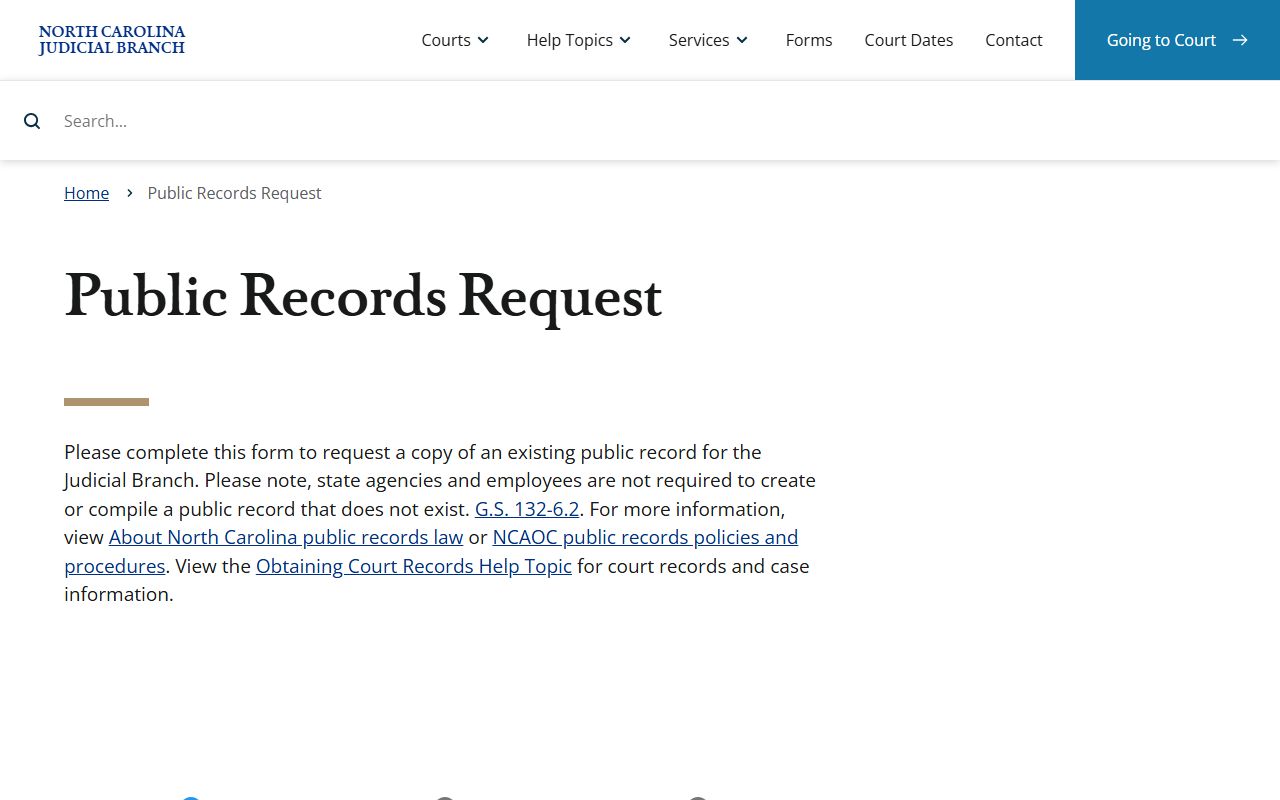
North Carolina public-records law gives broad access to public records, but case-file custody matters. The Judicial Branch public-records page says NCAOC is not the custodian of local court documents or case information and will not fulfill those local case-document requests. For Richmond County court records after a jail arrest, use Portal, the clerk's public terminal, or the Richmond County Clerk of Superior Court.
The Judicial Branch public-records request form is useful for Judicial Branch records, but local case documents usually route to the clerk in the county where the case was filed.
Sealed vs. Expunged Arrest and Court Records
North Carolina law restricts some records and makes expunged court records confidential. G.S. 15A-151 addresses confidentiality of expunged court records, and G.S. 15A-145.5 covers expunction eligibility for certain nonviolent misdemeanors and felonies when statutory conditions are met. Juvenile records, confidential investigative records, sealed matters, medical information, safety-sensitive jail information, and expunged records may be unavailable to the public even when a public arrest or court event once existed.
| Sealed | Expunged | |
|---|---|---|
| Public visibility | Hidden or restricted from ordinary public access. | Treated as confidential under the expunction order and applicable law. |
| Record existence | The record may still exist but is not open to normal public inspection. | The record is removed from public view and handled under expunction rules. |
| Law-enforcement access | Access depends on the order and statute. | Limited access may remain only as North Carolina law permits. |
| Practical route | Review the court order or ask the clerk about access limits. | Use the statutory expunction process and legal advice when needed. |
Background Check Limits
Casual court lookup is not the same as a regulated employment, housing, credit, insurance, or tenant-screening background check. Richmond County court records after a jail arrest can change quickly, and a charge record may not show final disposition without opening the full case. For any formal screening process, use a legally compliant consumer-reporting channel and verify results with the originating court or agency.
Important: Information found here or through linked tools may not be used for credit, employment, housing, insurance, or any other FCRA-covered decision.